Handwoven Pashmina Shawls of Kashmir: A Timeless Symbol of Luxury, Heritage, and Craftsmanship
Handwoven Pashmina shawls from Kashmir are much more than a fashion statement. They have a vibrant history that has been created over several centuries.
These shawls have won the hearts of people all over the world for the softness, warmth, and beauty that they exude. Handwoven Kashmiri Pashmina shawls demonstrate the craftsmanship that has been passed down through the ages. In the current scenario, where everything is being produced on a mass scale using synthetic fabrics, genuine handwoven Pashmina remains an exclusive luxury. This symbolises authenticity, sustainability, and heritage. This website focuses on the history, skills, materials, weaving techniques, and significance of Kashmiri Pashmina shawls worldwide.
What Is Pashmina? Understanding the True Meaning
The name “Pashmina” is derived from the Persian word “Pashm,” which translates to “soft gold” or “wool.” Real pashmina is produced from the extremely fine undercoat of the Changthangi goat, which is found in the mountains of Ladakh and the Himalayas.
Important Features of authentic Pashmina
- Extremely light and delicate. Supports actual hand-woven Pashmina, which is helping to keep this dying art alive.
- Natural warmth that’s not heavy.
- Comfortable and ventilated at all times.
- Rare, requiring much labour.
Pashmina wool is one of the finest natural fibres in the world. The authentic wool should have a diameter of 12-16 microns.
The Origin of Kashmiri Pashmina Shawls
A Legacy Rooted in History
The tradition of Pashmina weaving dates back over 700 years, and Pashmina shawls were awarded as a royal favour by emperors like Akbar the Great.
Pashmina scarves from Kashmir were taken to Persia, Europe, and Central Asia, where they became the hallmark of refinement and sophistication.
Cultural Significance in Kashmir
Pashmina weaving and processing are not merely an occupation for the people of Kashmir, but they also define their cultural identity. Entire families are engaged in different processes of making pashmina, from spinning to weaving and embroidery.
The Changthangi Goat: Source of the Finest Wool
Why Changthangi Wool Is Unique
The Changthangi goat has the capacity to survive in low temperatures, even -40°C. The goat also has a warm fleece that grows in winter, which is shed in the spring.
The fleece is:
- Collected ethically through hand-combing.
- Minimal quantity.
- Softer than cashmere.
It takes wool from 3-4 goats to make a single Pashmina shawl, which explains its scarcity and value.
Handwoven Pashmina Shawls of Kashmir: The Art of Traditional Weaving
Step-by-Step Pashmina Weaving Process
- Manual Spinning.
The raw wool is then cleaned and spun manually on a traditional spinning wheel called “Yindir” charkha. Machines cannot do this process.
- Handloom Weaving.
The threads are manually woven on wooden looms by expert weavers. It takes months and even years to complete one shawl, depending on the pattern.
- Natural dyeing.
The original Kashmiri pashmina shawls are colored using natural dyes obtained from plants. This makes the colours rich, durable, and earth-friendly.
- Finishing and softening.
The final steps involve washing, softening, and finishing the shawl to achieve a smooth and soft texture.
Handwoven Pashmina Shawls of Kashmir Embroidery Designs
Traditional Hand Embroidery Techniques
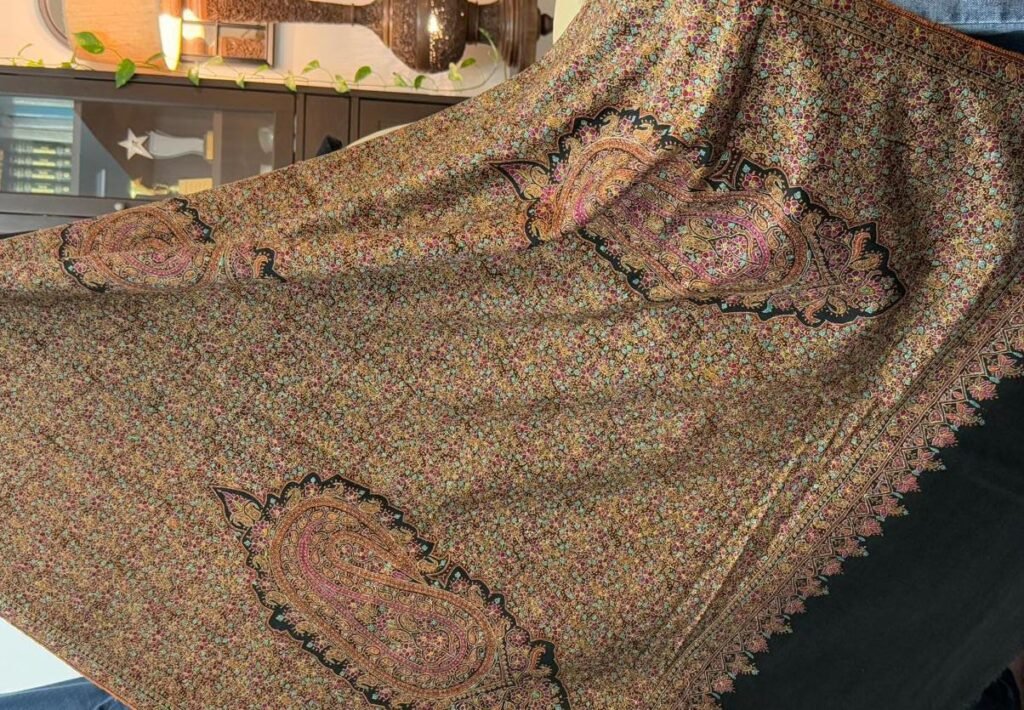
The luxurious stitching, which is done entirely by hand, is one of the most appealing features of Kashmiri Pashmina shawls.
Sozni Embroidery
- Wonderful needlework
- Extremely detailed patterns of paisley and floral designs
- It frequently takes months or years to finish
Tilla Work
- Silver or gold metallic thread embroidery.
- Traditionally worn for special events like weddings.
Kani Weaving
- Directly woven patterns into the fabric.
- Uses small wooden sticks called kanis.
- Very rare and valuable.
Each embroidered shawl is a unique piece of wearable art.
Why Handwoven Pashmina Shawls of Kashmir Cost So Much
Things which impact the value of pashmina
- Changthangi wool’s rarity.
- Labour-intensive weaving and hand spinning.
- Time-consuming needlework.
- Limited capacity to produce.
- Genuine craftsmanship.
Since authentic handwoven Pashmina cannot be mass-produced like machine-made shawls, each piece is unique.
How to Identify an Authentic Handwoven Pashmina Shawls of Kashmir
Guidelines for Avoiding Fake Pashmina
Here’s how you can identify the real pashmina from Kashmir because of the increasing demand for this product, which has led to counterfeit products being made:
- It can easily pass through a wedding ring.
- Light and warm.
- The weave has small natural flaws.
- It doesn’t look shiny or fake.
- It is usually labelled as GI (Geographical Indication).
It is probably not genuine Pashmina if the price seems excessively low.
Pashmina Shawls in Modern Fashionable Style.
A Global Luxury Statement
These days, the following people wear Kashmiri Pashmina shawls:
- Celebrities.
- Fashion designers of fashion.
- Royal families.
- International collectors of luxury.
They are worn as shawls, scarves, wraps, and stoles, and work well with both traditional and modern outfits.
Sustainable and Ethical Fashion Choices
Handwoven pashmina supports:
- Local Kashmiri artisans.
- Environmentally friendly production.
- Traditional Rules.
Choosing authentic Pashmina is an investment in sustainability and cultural preservation.
How to Take Care of Your Handwoven Pashmina Shawls of Kashmir
Proper Maintenance Tips
To preserve your Pashmina shawl’s softness and elegance:
- Use a dry cleaner or a cold water hand wash.
- Use a gentle detergent.
- Avoid twisting or wringing.
- Keep folded with wood or lavender.
- Avoid being in direct sunlight.
A Pashmina shawl can be passed down as an inheritance and last a lifetime with the right maintenance.
The Global Demand for Kashmiri Pashmina Shawls
International Recognition and Export
Shawls made of Kashmiri pashmina are very popular in:
- Europe.
- Middle East.
- United States.
- Japan.
They are frequently regarded as luxury gifts, wedding keepsakes, and collector’s items due to their exceptional quality and heritage value.
Protecting the legacy of Kashmiri Pashmina
Challenges Faced by Artisans
High global demand, traditional Pashmina artisans face the following challenges:
- Cheap, machine-made fakes.
- Declining artisan incomes.
- Lack of awareness regarding authenticity.
Supporting genuine handwoven. Pashmina helps to preserve this endangered art form.
Conclusion: Why Handwoven Pashmina Shawls of Kashmir are Truly Priceless
Kashmiri handwoven Pashmina shawls are a symbol of the perfect harmony between human skill, tradition, and the natural world. Each shawl represents a tale of centuries-old tradition, expert hands, patient craftsmanship, and the cold Himalayan winters.
A genuine Kashmiri pashmina is an investment in art, culture, and classic elegance, not just a fashion statement.
A handwoven Pashmina shawl from Kashmir is unbeatable if you appreciate authenticity, luxury, and heritage.


